Running a Travel Influencer Business on Fifty Ready Clips

The conventional path is expensive before it earns anything. Flights, accommodation, a camera, and months of posting come first, and sponsorship arrives much later if at all. A travel influencer business structured around products inverts that order entirely. The store opens first, the content feeds it, and revenue does not depend on a brand deal. This pack takes the idea further by supplying the creator as well. Fifty filmed clips arrive captioned, alongside fifteen product promos. Mia Fairchild, the included AI creator, keeps the same face and voice across every platform. The posting schedule stops depending on where you are. Disclosure stays your responsibility throughout. So does the accuracy of every route you sell.

Why a Travel Influencer Business Stalls Without Volume
Short-form platforms reward consistency above quality, which surprises most new creators. One excellent clip rarely moves anything. Fifty ordinary ones give the algorithm enough surface area to find an audience. Producing that volume alone takes months of filming, editing, and captioning. Most people quit somewhere in week three. Creators researching how to become a travel influencer hear about the highlight reel and rarely about the grind underneath. Removing the production burden changes the survival odds considerably. You schedule rather than shoot. The saved hours move into selling, which is the part that actually pays. Volume stops being the thing that ends the project.
What the Store Behind the Clips Contains
Videos without a destination waste attention. This bundle ships six components rather than four, so the destination exists from day one. Island-hopping guides, transport checklists, and a dive-day safety brief fill the catalog, each written and priced. The storefront arrives as clean HTML with homepage, product pages, a reading rail, and checkout, all written rather than placeholder. Nine articles ship ready to publish, which solves the first month of content on its own. Photography comes out separately at full resolution, covering island views, boats, and reef shots. A wordmark holds the header, the covers, and the profile pictures together. Sellers hunting travel itinerary templates to sell usually spend weeks writing them. Here they arrive finished. Your first month of publishing is effectively solved.
How a Travel Influencer Business Earns Without Sponsors
Sponsorship income is unpredictable and slow to arrive. Product income starts with the first sale and scales with the catalog. A reader who wants a tested route will pay for one rather than assemble it from twelve blog posts. Pricing usually settles between nine and twenty-nine dollars for a single guide, with regional bundles reaching higher. Delivery is instant, so margins stay high and support stays light. The model also survives algorithm changes, because nobody can demonetize a file you own. Brand deals can still follow later, on better terms, once an audience exists. Owning the offer changes the negotiation entirely. Revenue arrives before reach does. That reversal is the whole point of the model.
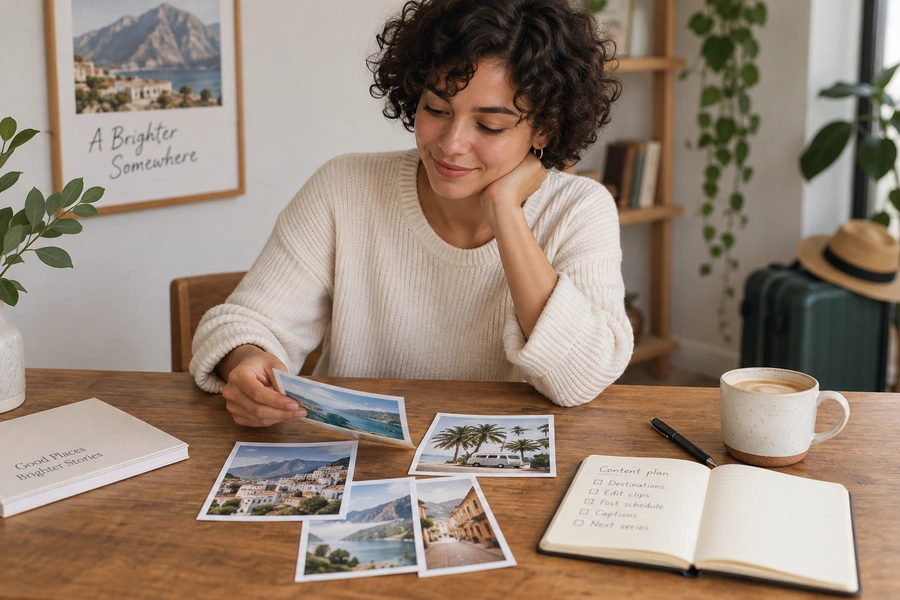
Trust deserves careful handling in this specific niche. Travel advice carries real consequences, since a wrong ferry time or an unsafe dive recommendation affects somebody’s trip. Review the supplied content against current conditions before publishing, and update it seasonally. Routes change, operators close, and prices drift. Keeping the catalog accurate is the one genuinely ongoing task in this model. Disclosure matters too, because platforms increasingly require synthetic media to be labeled. Label the creator clearly and let the content earn attention honestly. Audiences have grown comfortable with the format when nobody pretends otherwise. Creators exploring faceless travel content should treat transparency as a feature rather than a risk. Honest framing protects the account you are building.
Scheduling, Platforms, and Practical Setup
The clips are sized for TikTok, Reels, and Shorts, so one asset serves three platforms. Spread them across a month rather than dumping them in a week. Rotate formats deliberately: packing tip, route breakdown, safety note, product promo. Watch which topics generate comments and schedule more of that type. The storefront publishes on any major platform, since it arrives as standard HTML and image files. Any developer can move it in a few hours if you prefer a specific stack. Marketers studying ai influencer marketing point to reliability rather than novelty as the real advantage. Campaigns ship on schedule. Nobody burns out mid-season. Reliability is the practical advantage rather than novelty.
What a Travel Influencer Business Costs to Run
Running costs stay unusually low, which is the practical appeal. There are no flights, no accommodation, and no equipment to replace. The videos already exist, so the recurring expense is scheduling time. Hosting and payment processing account for most of the remaining outlay. Annual content updates are the one real obligation, since routes and prices drift. That leaves budget for advertising, where most new stores struggle. Profitability therefore arrives at lower volume than a traditional creator operation needs. Reinvest early revenue into the catalog rather than into production. Add destinations that match wherever buyers already ask about. Nothing in the model requires a team.
Where a Travel Influencer Business Goes Next
The first quarter should test positioning instead of chasing follower counts. Watch which guides sell and which clips drive checkouts rather than views. Lead the homepage with whatever wins and demote the rest.
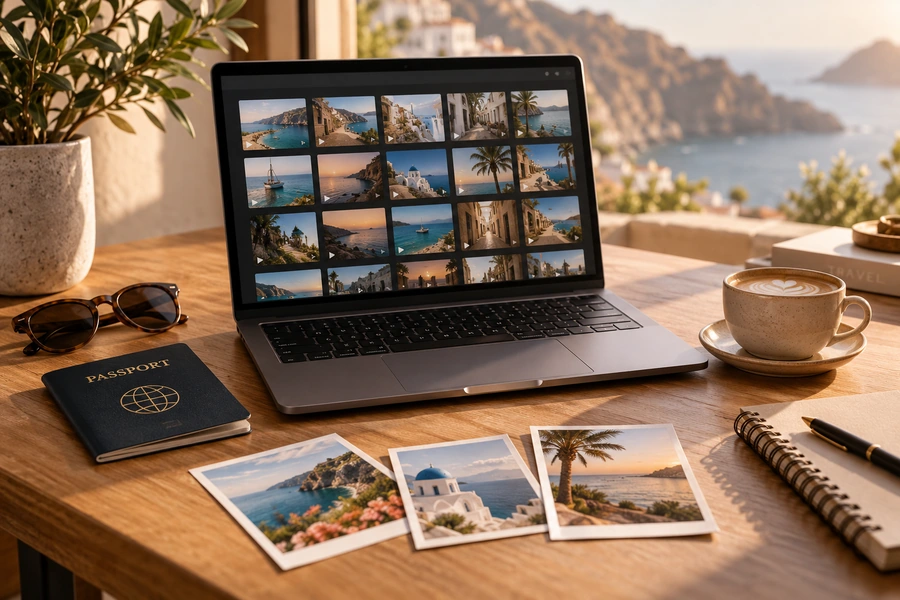
Build an email list from one free itinerary and write seasonally to it. Travel demand peaks predictably, so plan launches six weeks before each booking window opens. Add regions as demand tells you where readers are going. A travel influencer business compounds because trips repeat every year. Your own footage can join the rotation later, sharing the same brand. Models like a smart travel online business asset pack ready to use with an AI influencer or a digital creator business built in an hour demonstrate how structured content can support a repeatable publishing system. Results depend on effort and market conditions, and no pack guarantees income. The production bottleneck, though, disappears on day one.









Leave a comment